Wednesday, December 1, 2021

Authors, Don't Take Yourself So Seriously

If you've ever sat down to talk marketing with a romance author, then you know just how serious professionals in the trade can be when it comes down to the bottom line on book sales. Everything from which sales pitch works best, to cold-reading someone at a convention, to which social media platforms are most effective for moving product, what goes on once the manuscript hits the market is definitely serious business.

But before that? Let's all just take a moment to be honest with each other... we're making up stories. They might be heartfelt stories with moments of great pathos. They may have a lot of meaning to you, and hopefully to your readers. But they're also about wish fulfillment, Vikings riding dinosaurs, impossibly good looking secret agents, vampire princes, and zombie love triangles.

We should be serious about our work, but our work itself is rarely serious... and if we take it too seriously, the work suffers. Badly.

But what is the true meaning of this work? Do you understand?

As always, before I get too deep on this week's topic make sure you sign up for my weekly newsletter to make sure you don't miss anything! Also, if you want to help me keep the wheels turning around here consider becoming a Patreon patron as well.

Lastly, to get all my information in one place, just click on over to my Linktree!

Most Great Work Wasn't Written To Be Such


You've heard of Frankenstein I'm assuming? That book which is one of the great entries in the canon of horror, and which one could argue was the seed that created the entire science fiction genre? A work of important literature, no doubt, as I'm sure most of us acknowledge.

What we sometimes forget, though, is that it was also written by one of the OG teen goths during a long weekend full of sex and drugs with one of the more infamous party animals of the day. A book that was created on a bet during a stormy night as Mary, her husband, and their host were taking a break between threesomes.

Mary knew how to party, is what I'm saying.

Example of this are everywhere in so-called literature. Shakespeare might be considered high-brow these days, but it's just a collection of dick and fart jokes where characters get progressively gayer and more outlandish. Also, it was written as popular entertainment for the masses. The whole basis of The Lord of The Rings is because Tolkien was telling tales to his kids, and one of them was very concerned with canonical consistency. This led to The Hobbit, and demand for more of those tales led to one of the more influential works that created the genre of high fantasy. Jane Austen's work is arguably one, big eyeroll from the author about the tedium of social nicety, wrapped up in flowery language and with a story a lot of readers can identify with.

This list goes on.

The point of all of this is that most of what we think of as "serious" books (and even a lot of films) were not made with the intention of being great, foundational works of art, or redefining the way we look at stories. They were written on a whim, on a bet, or as an example of crass commercialism to get butts in seats, or books in hands. And while the authors arguably took the work seriously (constructing good narratives, creating engaging characters, telling a good tale, etc.) they didn't take themselves and their task seriously. Because while good books will often stand the test of time, it's the story they tell, and the way they engage the audience that matters.

So lighten up already! Just embrace that, at its core, what we do is a silly kind of magic. It can touch people's lives, brighten their dark days, and stab them through the heart, but the more seriously we take ourselves the more it's going to take our focus off of telling a good story.

Looking For Additional Reading?


If you're looking for additional stuff to check out before you go, might I recommend the following?

- 5 Tips For Creating Fantasy Towns and Cities: I've been up to my elbows in professional fantasy world building for most of this year, and these are the tips I've found most useful for making sure places feel organic, no matter how fantastical they are.

- The Silver Raven Chronicles Part One: Devil's Night: A free fantasy short story, this tale begins in the old quarter of the city of Kintargo. A rumor whispers in the corners of a ghost risen from the past to take Cheliax to task for allowing devils into its heart, and its throne room. Most don't believe it... but one of the city's dottari finds this ghost is all too real when it steps out of the shadows with a message for her to spread to her fellow enforcers. They are no longer welcome in his city.

Like, Follow, and Come Back Again!


That's all for this week's Craft of Writing! For more of my work, check out my Vocal archive, or at My Amazon Author Page where you can find books like my cat noir novel Marked Territory, its sequel Painted Cats, my sword and sorcery novel Crier's Knife, or my most recent short story collection The Rejects!
 
And to stay on top of all my latest news and releases, collected once a week, make sure you subscribe to The Literary Mercenary's mailing list

If you'd like to help support my work, then consider Buying Me A Ko-Fi, or heading over to The Literary Mercenary's Patreon page! Lastly, to keep up with my latest, follow me on FacebookTumblrTwitter, and now on Pinterest as well!

Wednesday, November 24, 2021

I Just Want To Write...

It's that time of year again where we all recall Charles Dickens and his most famous tale. For those of you who aren't authors, you're probably thinking of that one book he wrote where a member of the bourgeoisie abuses his clerk until he's bullied into being a better person by three supernatural incarnations of the Christmas holiday. For those of you who are authors, though, you're probably recalling the tales of how Dickens was on his grind 24/7 just to make rent. Hosting public readings, selling his stories by the chapter, and braving cold winds and a colder audience just to try to put shillings in his pocket.

And I get that this is a reminder to authors out there that you have to do more than just put words on the page. I've been in the game for a while, and I know that shaking hands and meeting fans is part of the gig... but goddamn. I just want to write books. Is that really too much to ask?

Seriously, I just want to write.

As always, folks who want to stay on top of everything I'm working on should subscribe to my weekly newsletter so you don't miss any updates. And if you want to be one of the folks who helps me focus my efforts purely on making things you enjoy, then become a Patreon patron today. It seriously helps far more than I can say.

And if you want all my information in one place, I do have a Linktree now, so stop over there if you're of a mind!

So When Are You Gonna Start Making Videos?


Before anyone starts cracking their knuckles to leave helpful tips in my comments section, I want to lay out a couple of facts for you here. At time of writing I have 4 novels on the market, along with 2 short story collections, in addition to appearing in a dozen or so anthologies, all of which are available on my Amazon author page. I have over 100 RPG supplements that all pay me royalties on sales, and that number is growing every month as more and more stuff I turned in hits the market. I have a Patreon. I have a Ko-Fi. I have a Vocal archive with over 200 articles in it that pay me based on views. I'm active on Facebook, on Twitter, and even on Pinterest. I post on Reddit, I'm active on MeWe, and from time to time I even stop over on LinkedIn. I also run two blogs.

Numbers... it all comes down to numbers.

The problem is that, at the end of the day, it's just not enough. Not enough followers, not enough readers, not enough patrons, and not enough traffic. I get little gains here and there, and every now and again something explodes a bit and gets momentarily popular, but even with all the effort going into everything the little streams aren't making much of a river. At the end of the day, it boils down explicitly to not being able to reach enough people... but the engine's already running in the red, and giving it more gas just might make it explode.

I say this because I've had so many people suggest additional things to stack onto what I'm already doing. That I should start a YouTube channel, or get on TikTok, both of which require me to learn new skills and pour a lot of effort into making fresh content that isn't putting money in my pockets. That I should start a podcast, which is a long-form style of content that requires a lot of energy and effort that would also require mastering new skills and using different formats. One or two people even suggested I get on the zine train, since they seem to be having something of a resurgence.

I'm not saying this wouldn't work. I'm not even ruling out the possibility of trying out one or two of these options. But what folks need to understand is that authors don't have hours and hours of the day just laying around to master new skills in. And even if we did, most of us didn't become authors because we wanted to be on camera, or to broadcast our voices on the air waves... we did it expressly because those were things that didn't appeal to us.

It's like I said back in Creators Need Support, Not Another Hustle. We can produce content until our fingers bleed and our blood pressure spikes, but it does no good if no one's actually seeing it. You, the readers, are the ones who decide just how well-know we are... or aren't. So whether it's myself or another author out there who's work you enjoy, take a moment to do something to help us reach more people. Follow our social media accounts. Share our posts. Tell your friends and family about us. Get one of our books for them for Christmas. Leave a rating and review to help boost the signal.

Because you might be just one person out there, adding your voice to ours. But if hundreds of you all join (to say nothing of thousands) it makes a huge difference. This is true for big creators, but to smaller folks like me it can be game changing. So please, keep in mind that if you want us to keep writing, it's a lot easier to do that if we're not stretching ourselves so thin we barely have room to breathe.

Like, Follow, and Stay Tuned!

That's all for this week's Business of Writing!

If you'd like to see more of my work, take a look at my Vocal archive, or at My Amazon Author Page where you can find books like my noir thriller Marked Territory, its sequel Painted Cats, my sword and sorcery novel Crier's Knife as well as my recent collection The Rejects!

If you'd like to help support my work, then consider Buying Me A Ko-Fi, or heading over to The Literary Mercenary's Patreon page! Lastly, to keep up with my latest, follow me on FacebookTumblrTwitter, and now on Pinterest as well!

Wednesday, November 17, 2021

Good Ideas Are A Dime A Dozen (But They're Worthless If You Don't Use Them)

It isn't hard to have good ideas for books. That might sound like a controversial statement (and I'll address the elephant in the room later on in this entry), but it's something I've found to be true the longer I've been an author. From middle school kids in an after school writing club, to that hairdresser who likes to read bargain bin thrillers, to that friend of yours who only grasps storytelling in the broadest strokes, everyone you've ever met has the capacity to come up with a great idea.

Ideas are cheap. It's execution that's rare.

But I had the idea... what do you mean I have to write the book too?!

As usual, if you want to stay on top of all my latest content, subscribe to my weekly newsletter. And if you want to help keep the blogs going, consider becoming a Patreon patron today!

It's Not Hard Having Good Ideas


There's this weird obsession with the creative spark that lies within the seed of a really good idea. Whether it's a high fantasy setting full of dark magic, or a sci-fi dystopia that takes place on the dark side of the moon, that initial idea can be like taking a shot of strong liquor... or being brushed by the fingers of a wayward muse. It's intoxicating, and it can drive even normally languid people into fits of creative mania as they watch the new idea spiral out into a galaxy like a mental version of the Big Bang.

Mmm... brain juice go brrrrrrrrrr...

The problem with so-called good ideas is that this is the fun part of the creative process. It's messing around with concepts and ideas, but you don't really have commitment to anything. You're having fun, and you should be... but this isn't the part of the process that makes or breaks you as a writer. Because anyone can have good ideas.

Not everyone can take those ideas and turn them into a story. And that's where your execution comes in.

Execution is the process of taking your idea and turning it into a completed work. It's all the time you take to craft the narrative, figure out the characters, re-write sections of the manuscript, and basically do anything else that would fall under the actual "writing" part of the job.

Because I'm going to let you in on a little secret; good ideas aren't required for a good story. So don't obsess over them.

A Really Good Burger is Better Than a Poorly-Cooked Steak


Have you ever tried to tell someone a story about a dream you had? Or an experience that hit you while you were on psychotropics? Well if you've never done either of these things, generally you do it because you want to convey the feeling of elation, terror, discovery, or astonishment you had. Writers generally do the same thing; we had this amazing explosion go off in our heads, and we want to share it with our readers in a way that lets them take the same journey we did. However, the reason those narratives rarely go over well is that they're muddled, confusing, or outright nonsensical, filled with, "you had to be there," kinds of moments that felt profound to the storyteller but which don't grab the audience at all.

Or, put another way, your idea could be an extremely fine cut of steak. But if you scorch it black, don't season it properly, or worse just try to serve it to someone raw, they aren't going to like it. On the contrary, your idea might be plain, ground hamburger meat. Nothing special, and nothing unusual. But if you prepare it properly, add the right seasonings, pair it with the proper flavors, add a bit of sauce, and cook it just right, the result is going to blow the steak out of the water, even if it was technically a finer cut to begin with.

What I'm saying is that good ideas aren't as special as we think they are. It's how we prepare them and present our ideas to the audience that matter. And a concept that's just run-of-the-mill with no mind-blowing revelations or bells and whistles can easily outpace what should be an extremely engaging idea that's executed poorly.

Focus on your cooking. If you can make any story taste great, then you won't spend all your energy trying to find the right "good" idea to wow the audience with.

Like, Follow, and Come Back Again!


That's all for this week's Craft of Writing! For more of my work, check out my Vocal archive, or at My Amazon Author Page where you can find books like my cat noir novel Marked Territory, its sequel Painted Cats, my sword and sorcery novel Crier's Knife, or my most recent short story collection The Rejects!
 
And to stay on top of all my latest news and releases, collected once a week, make sure you subscribe to The Literary Mercenary's mailing list

If you'd like to help support my work, then consider Buying Me A Ko-Fi, or heading over to The Literary Mercenary's Patreon page! Lastly, to keep up with my latest, follow me on FacebookTumblrTwitter, and now on Pinterest as well!

Wednesday, November 10, 2021

To Be Clear, I Don't Make Money at Conventions

I am not shy about how hard it is to make a living as a writer. Anyone who follows me on social media, or who reads this blog, likely knows more about how the sausage is made than they ever wanted to at this point. However, this week I wanted to take a second to address something people have been repeatedly saying to me ever since the vaccine came out, and in-person events have become possible once again.

"Maybe once conventions start up again you'll be able to make some money!"

Roll on snare drum. Everyone laughs. Good joke.

Now, I've been going to conventions in a professional capacity for about a decade now. I've been to shows as big as Gen Con in Indianapolis, and as small as Windy Con in Chicago. I've been a panelist, I've held down a signing table, and I've actually had some dealer space. So let me be very clear here.

I have almost never made money at a con. The sheer amount of costs that have to be cut, and the amount of books I would need to sell to make a profit, is outright laughable. And since I just got back from Gamehole Con in Wisconsin, and I have some hard, recent numbers, I figured I'd share for folks who could use a real-time break down.

Before we get into hard numbers, those who want to stay updated on my content should subscribe to my weekly newsletter. Also, if you want to help me keep the wheels turning, consider becoming a Patreon patron... even a little donation makes a big difference!

Seriously... Making a Profit is a Bastard And a Half


So, for those of you not familiar with Gamehole Con, it's up in Madison Wisconsin. It's been steadily growing, and while attendance was down a little bit, it was pretty comparable with pre-pandemic numbers according to folks who keep track of such things. I was there because some friends of mine who run Gargoyle Forge (an awesome LARP weapon company, whom you should follow on Facebook if you haven't already) had a booth, and they offered me a side table so I could sell books to passerby. They also let me crash with them in their hotel room, and made sure my badge was covered. Keep that in mind going forward.

All right... let's get into the numbers!

Now, I brought 30 or so books with me to this event, including my sci-fi dystopia Old Soldiers, and the two installments in my Hard-Boiled Cat series Marked Territory and Painted Cats. I sold them for $10 each, which is something of a steal considering the Amazon price is usually $13 and change, and that's without taking shipping and handling into account.

By the end of the con, I'd sold 23 books. So far, that's $230 in pure profits. If this story ended here, and I could make a couple C-notes and change in sales even at a small con, I wouldn't be writing this entry. Because now we have to talk about the costs.

Right out of the gate, It took my about $40 round trip in fuel to drive to the event, plus $10 in tolls. That's $50 in costs, which brings us down to $180 in profit. Still, that's not terrible. Of course, with most of my books sold, I had to re-stock. That cost $120. So we're down to $60 in profit for the event.

But what if I had tried to do this on my own without glomming on with my friends? Well, that $60 I hadn't spent likely would have just been my badge fee. Leaving the several hundred dollars in hotel room cost, table cost, and food costs (my friends made sure I was fed, too... seriously, I cannot overstate how much they helped make this show a success for me). So, even selling a majority of the stock I'd brought with me (a stock which I hadn't paid for, mind, as Ring of Fire gave me 10 free copies of every novel that I'd published with them) would have probably resulted in my spending $300-$500 just for the privilege of being at a show.

Cut Costs, Increase Sales


There are probably people out there right now who are thinking of all the things I could do to cut my costs as much as possible. Only go to local shows, or ones where I can crash with someone else instead of paying for a hotel room. Only attend events where I can share a table, and thus pay as little as possible for it. Volunteer for programming to get my badge comped after the show. And so on, and so forth.

These folks aren't wrong, but I chose Gamehole Con and my experience there very specifically to make a point. The point is that I showed up with a free stock of books, didn't pay for a table, didn't pay for hotel, didn't pay for food, managed pretty decent numbers for an independent author, and I still barely made $60 for three days worth of work (and even less once I square away the taxes and such). Work where I wasn't writing new articles, putting out fresh gaming supplements, or polishing off new blog entries.

Pizza's on me this week, I guess.

Even by cutting my costs to the absolute bone, and making a really big profit margin per sale (because even charging $13 for books I have to pay for, thus making them only cheaper than Amazon by cutting shipping and handling charges, I'd be making less per sale), I can barely scrape out ahead at even a small convention. And even if it were technically possible for me to sell more books at an event, I can only afford to buy a certain amount of stock to have on-hand... my margins are too thin for me to drop a few hundred on books I might not sell for months or years when rent is due by the 5th.

So why go to cons at all, then, you might be asking? Especially since, as I write this, I'm gearing up to go to Windy Con in Chicago this weekend?

Well, because conventions are where I get to shake hands, and make fans. It's where I get to stand up on a platform and discuss what I do for a living. It's where I exchange business cards with agents and designers, and where I find work. Attending conventions is how I got an in with my current publisher, and it's how I've pitched several projects directly to editors and creative directors over the years. Cons are also the closest thing I have to a vacation in this capitalist hellscape where I don't get days off, and they're the only real events I get to look forward to.

But for all the great things about conventions, they're not a viable way for me to pay my bills. If I could sell enough books at a convention to not just pay for costs but to turn a profit big enough to cover my rent (something like 200 copies sold in a weekend, by my calculation, or 10 times better than my best performance so far), my fan base would likely be so big that I wouldn't need to do that in order to break even at the end of the month.

So remember that when you're at a show, and you see someone there trying to move copies of their novel. If you're interested, and you have the dosh, get a copy. If you're not, move along, because we're under a lot of pressure to avoid losses, and it takes a lot of energy to have your game face on all day, every day at a show like that.

One More Shout Out For Gargoyle Forge!


Also, because I cannot say enough good things about Gargoyle Forge, check out this video review of their product. They're likely the main reason I'll be at any cons in the future, so give them some love if you can.


Like, Follow, and Stay Tuned!

That's all for this week's Business of Writing!

If you'd like to see more of my work, take a look at my Vocal archive, or at My Amazon Author Page where you can find books like my noir thriller Marked Territory, its sequel Painted Cats, my sword and sorcery novel Crier's Knife as well as my recent collection The Rejects!

If you'd like to help support my work, then consider Buying Me A Ko-Fi, or heading over to The Literary Mercenary's Patreon page! Lastly, to keep up with my latest, follow me on FacebookTumblrTwitter, and now on Pinterest as well!

Wednesday, November 3, 2021

Story Bibles... Are They a Bit Overkill?

Since it's Nano season, there's a lot of folks sharing tips, tricks, and tools to help organize their stories and get them down on the page; one thing that I've seen a lot of folks talk about is the use of a story bible. What I would say is that, for a lot of novelists out there, this may be like loading up a fully-automatic, laser-guided nail gun when you just need to drive a handful of hardware... it's going to actually cost you far more time, energy, and effort to put together the story bible than it will to write the damn book in the first place.

We've got every facet of personality, full history, and preferred brand of underwear...

As always, folks who want to stay on top of all my latest should sign up for my weekly newsletter! And if you want to help grease the gears so the machine keeps turning, consider becoming a Patreon patron so I can keep doing what I do.

What The Hell is a Story Bible?


If this is the first time you're hearing this term, that's probably not a big surprise. As Jane Friedman points out, the idea is much more common for television writers, though it also shows up among comic book writers and roleplaying game creators as well. In short, the story bible is the repository of details that writers need to remember for future installments. Whether it's the make and model of car a character's sister drives, or the story behind a scar on their cheek, or the details of the long-running antagonists a hero will have to deal with, the story bible is a tool that ensures continuity from one story to the next.

It's all connected!

While there are a lot of writers who feel that story bibles are useful documents to create (particularly those who are writing a series with a lot of details), they definitely aren't for everyone. The main reason is because these bibles are meant to keep entire teams of writers on the same page going forward, making sure that even if a staff rotates out there's a reference document that can easily be checked for continuity without someone having to read every script or watch every episode until they find the answers they need.

Most of us don't need that.

Make Sure The Tool is Actually Helping


The only similarity between writers as a community is that we all have our own methods of doing things. Some of us can keep an entire 10-book series in our heads with perfect recollection. Some of us need to write out a literal bible with all the details we know we aren't going to remember from one day to the next. Myself, I took about a half a page of notes when I wrote Marked Territory. I increased that to a full page of notes for Painted Cats, because I was including more cat breeds in it and I couldn't remember all of them off the cuff.

Sequels are supposed to expand, right?

If I were going to convert the Hard-Boiled Cat into a TV series, or even just animated movies, then I would definitely put together a story bible to make sure the writers, animators, etc. were all on the same page. And if I were going to bring more people in to work on the book series with me, I'd likely do the same. As long as it's just me writing these stories, though, I probably won't need to go that extreme. Especially if I have the previous files on my computer, and I can just run a search to find what I need in the previous stories.

However, there are going to be some writers who find this a helpful tool. If that's the case for you, then you should definitely use it! With that said, I have one caution about this method you should take to heart; do not use it as an excuse to do something other than actually write.

I say this with as much sympathy as I can, but a lot of us will take absolutely any excuse not to actually write our books. And the most insidious excuses out there are the ones we can convince ourselves are actually helping when they aren't. Sort of like how we can convince ourselves that because a pizza has a gluten free crust we can eat the whole thing without worrying about our diet, even though deep down we know the effect it's going to have. So if this is a tool you haven't tried before, consider giving it a whirl (and doubly so if you're part of a group project, or you think it will expand beyond you at some point). But if you find yourself just tinkering with your story bible, and constantly coming up with one more aspect of the world, your cast, etc. to expand on instead of getting the job done then it might be a bigger hindrance to you writing your book than it is a help.

Like, Follow, and Come Back Again!


That's all for this week's Craft of Writing! For more of my work, check out my Vocal archive, or at My Amazon Author Page where you can find books like my cat noir novel Marked Territory, its sequel Painted Cats, my sword and sorcery novel Crier's Knife, or my most recent short story collection The Rejects!
 
And to stay on top of all my latest news and releases, collected once a week, make sure you subscribe to The Literary Mercenary's mailing list

If you'd like to help support my work, then consider Buying Me A Ko-Fi, or heading over to The Literary Mercenary's Patreon page! Lastly, to keep up with my latest, follow me on FacebookTumblrTwitter, and now on Pinterest as well!

Wednesday, October 27, 2021

Even Small Goals Can Seem Out of Reach When You're an Independent Creator

One of the recurring themes on this blog has been the disconnect between how the public perceives the earnings of creative professionals, and what those earnings actually look like. Because as I've mentioned time and time again, most people only see famous millionaires (Stephen King, Neil Gaiman, etc.), or fictional authors (Angelica Fletcher, Richard Castle, and so on), so they have an extremely biased view of what a reasonable income would be for someone who writes for a living. And even if they know that most writers aren't bestselling millionaires, they assume that if you're a "real" author that you at least make the same as someone earning minimum wage.

Truth is, most of us don't. What's really frustrating about it, though, is that the numbers a lot of us need to hit to make a living are so low, yet we still can't manage them except through years of sweat, and occasionally lucky rolls of the dice.

Come on, come on... it's not that far!

Before I get into the numbers, you can help me reach my goals by becoming a Patreon patron today! And if you just want to stay on top of all my latest releases, subscribe to my weekly newsletter as well!

Some Examples of Small, Unattainable Goals


Before we get started, I want to lay out some numbers for you. I live in government-subsidized housing in a small town in the Midwest. So, the numbers I'm going to throw around are going to be nothing compared to what authors would need to live in big cities, or pricier suburbs. Additionally, if I make more than $16k in a single year I would lose access to what healthcare I have through the state of Indiana. So I'm not even talking about thriving in many of these situations, just paying bills and occasionally going out for tacos when a new book drops.

Something to keep in mind as I start laying out facts and figures for you.

This is also why I spread my eggs among many baskets.

Let's say I wanted to earn $12k a year. For most people that's a laughable wage that's far below the minimum, but we'll take that as an example. After all, since it's so small, it should be pretty easy to make that, right?

Well, if I wanted to earn $12k a year from Patreon I would need to clear $1k every month. I have over 700 followers on my author page on FB, and over 1,200 and growing on Twitter, and there are social media groups with 100k+ people who see my work on the regular. So, in theory, it shouldn't be too hard to find 100 of them to give me $10 a month, right? or 200 who could part with a fiver? Even a thousand people who could each give me $1 every month, which is less than the price of a Netflix subscription?

At time of writing I have 39 patrons. I deeply appreciate all the help they give me, however, my monthly take-home support from them is less than $300. And even at the highest subscription numbers I ever had on that platform, I never made more than $320 or so per month.

Given there are people making thousands to tens of thousands of dollars a month on Patreon, that goal doesn't seem unreasonable. But I've been on the platform for years, and I've reached out in all the ways I can, but it's never grown anywhere near the level I would need it to be at to make a living. You could help that by becoming a patron today, though!

Okay, but what about my books?

Let's move onto the next basket... what about all those books I've written? From my Hard-Boiled Cat mysteries Marked Territory and Painted Cats, to my sci-fi thriller Old Soldiers, to my independent books Crier's Knife and The Rejects, I've got a sizable archive of stuff for dedicated readers to check out.

So what would it take to make that very small living just selling those?

Well, I make about $3 or so per sale. There's variation depending on platform, format, etc., but we'll use $3 to lowball it. So, I'd need to sell about 4k books a year to make bank. That's about 1k books per season, or three hundred and change a month. 10 books a day, give or take. And since there's over 300 million people who speak English in the world, surely it's not unreasonable that I could sell at least that many novels per day?

At time of writing, that's just not the case.

From my Ring of Fire books (two cats and the space marines), I get paid once every 6 months. That check has been consistently in the $120 range, which isn't nothing, but does translate to about 40 books sold over a 6 month period. Far as the pulpy sword and sorcery novel and the independent short story collection, I'm lucky if those move any copies at all these days. Doesn't matter where I link them or how I promote them, they're just a tough sell, and I don't have any companies backing me up on the marketing for those two.

Again, it's not an impossible number... it's just one that feels impossible to reach without the next best thing to divine intervention. Almost as impossible as actually getting people to read the books and leave reviews. You only need 50 of them for Amazon to start promoting you to other browsers, but the best I've managed to do is 25, and that's on the oldest novel I have out. None of the others have even broken 20 yet (though anyone who decides to finally leave their rating and review could make a big difference there).

What about all those RPG products you work on?

One of the biggest earners I have is the sheer bulk of RPG supplements I put out every month (all of them collected on a pin board for the tabletop folks reading this). With roughly 120 supplements with my name on them out at time of writing, one would think that I make all sorts of bank off of them. After all, even if my royalties are a small cut of the overall sales, they've got to add up when we're talking about such a large archive, right?

Yes and no.

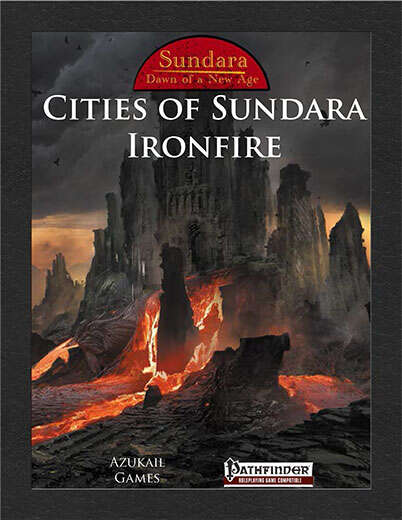
While my royalties and affiliate earnings have gone up over the years as the archive has grown, we're still talking very small numbers. The largest amount I receive from any of my supplements is $1 per sale, and that's only for a handful of titles. The rest range from $0.10 on the smaller end, to $0.60 on the larger end (such as for Ironfire: The City of Steel that you see above). So after 4 years or so of hammering away on title after title every month, what does that add up to? On average, between $200-$250 a month. Sometimes it's higher than that because I was part of a big bundle or a popular deal, but that's the range I'm looking at right now. And I didn't start regularly earning over $200 a month on those sales until May of 2021.

So I'd basically need to increase the earnings on those five-fold just to make less than minimum wage. A feat that, all other things being equal, could take me 20 or so years of additional labors.

All of These Things Require The Audience To Act


One of the unfortunate truths about being an author is that I actually possess very little power to change my own situation when all is said and done. Because it doesn't matter how many novels I churn out, how many blog updates I write, what conventions I attend, or how I tweak my keywords... because at the end of the day what makes or breaks creative professionals is you. The audience.

Without you, we are nothing. You are the crowd, and our rise or fall is determined by your whims alone.

Are you not entertained!?

So if you made it this far and you want to help, there's a lot of things you can do. If you have the spare dosh consider becoming a Patreon patron, or buying some of my books and games. If you're broke (just like me and everyone else), consider leaving a review of anything of mine you've enjoyed. Follow me on my social media links below to help boost my signal, and share around any books or supplements you think are cool. Hell, check out my Vocal archive and give it some reads (since it pays me based on how many reads my work gets)! There's over 200 articles in that archive, and you're sure to find something you like and want to share with your social media circle.

And remember this whenever it comes to other creators out there who make the things you like. Because except for some very notable exceptions, we're trying to ice skate uphill and could use the help.

Like, Follow, and Stay Tuned!

That's all for this week's Business of Writing!

If you'd like to see more of my work, take a look at my Vocal archive, or at My Amazon Author Page where you can find books like my noir thriller Marked Territory, its sequel Painted Cats, my sword and sorcery novel Crier's Knife as well as my recent collection The Rejects!

If you'd like to help support my work, then consider Buying Me A Ko-Fi, or heading over to The Literary Mercenary's Patreon page! Lastly, to keep up with my latest, follow me on FacebookTumblrTwitter, and now on Pinterest as well!

Wednesday, October 20, 2021

Writers Need To Parse Criticism Carefully Before Making Changes

When your whole job is making sure you have a happy audience, it's important to keep an eye out for criticism. I've said more than once that if you create something, and people don't like it, that doesn't mean the audience doesn't "get" what you were doing as a creator; they're the ones who have the final say in whether or not you are successful. Talent, vision, a large platform, a big marketing budget, all those things can help, but at the end of the day the question is whether or not this thing you made pleased your audience.

But there is a flip side to that coin. Because there's going to be criticism of your work no matter what you choose to make... the question is whether the people and quarters the criticism is coming from matters, and if it should require you to change course or not.

Original comic by Phillip M. Jackson

As always folks who don't want to miss any updates should subscribe to my weekly newsletter. Also, if you want to help me keep the content flowing, consider becoming a Patreon patron as well! It makes a big difference, even if you can only spare a little bit each month.

If They Aren't Part of Your Audience, Who Cares?


I talked about this back in my post Cancel Culture is Not a Thing, but I wanted to reiterate it this week for all the authors who are feeling skittish here. You cannot please everyone. Period. You could write the most heartfelt romance with absolutely soul-clenching drama, and there are going to be people who hate it. They might not be fans of the genre, or they think it's too bombastic, or they feel there's no substance; whatever it is, there will be people who hate your work. You cannot avoid that.

And that is not the kind of criticism you should be worrying about. At all. Why? Because the people who are making these complaints aren't part of your audience. There is nothing you can do to please them, so it's pointless to try to do so because (as the comic above proves) you're more likely to alienate your current audience than you are to win over a new one.

Your complaint has been noted. Now piss off.

Imagine for a moment that you ran a burger restaurant, and someone came in off the street to complain about your menu. You didn't offer pasta, or your vegetarian options were lacking, or you didn't have a smoothie machine, and they're mad about it... what difference does that make to you? Are they an existing customer of yours? Have they been loyally supporting your operation, and they're simply making a request about something they'd like to see you offer in the future? Or are they someone who doesn't actually patronize your establishment who is loudly complaining that you aren't catering to them, even though they aren't actually part of your demographic?

Because if we're looking at the former, those are people you might want to listen to. They're already interested in what you're making, and they'd like to see more of it, but they also want you to take their wants into consideration for future expansion. If we're talking about the latter, though, who cares what they want? Especially if the things they're demanding aren't part of your service, and it isn't something they're going to support, they're just blowing wind.

Consider Who You're Trying To Please


Too many of us just assume that if people are criticizing us that we must be doing something wrong, and we need to fix it before we do damage to our reputations and careers. And that might be true... or you might just have blowhards screaming at you because they're mad they aren't the center of your universe.

And sometimes, if you listen very carefully, the criticism you're getting can actually tell you if you're going in the right direction.

The guy with the Confederate battle flag in his profile is upset? Good.

Give you an example. When I was working on my 100 Kinfolk Project for Werewolf: The Apocalypse I had all sorts of less-than-desirable folks slinging negative criticism my way. I had people who were upset that neo-Nazi characters were only present in the villain book, and not available as "edgy" allies for heroic characters. I had people throwing hissy fits that I "overrepresented" gay and trans characters in the project (something I addressed in A Response To The "Flaw" in My Kinfolk Project for those who are curious). However, given that the whole purpose of the project was to be more inclusive of the sorts of people usually ignored by the game's material, and to make it clear that we were no longer playing in the 90s, these were basically people who were mad I'd baked a chocolate cake. They didn't want chocolate, they wanted vanilla, and they didn't want to share it with anyone else.

If you get my drift.

Should I change the content I'm putting out to make those people happy? No. If they don't like it, or they think it isn't white or straight enough for them, I don't really care. If my work upsets somebody because now they can't play a neo-Nazi without everyone calling them out for it, good, I helped in a small way. But if someone who was part of a marginalized group reached out to me and told me I'd messed something up, or used hurtful language? If someone wanted to correct a mistake I'd made regarding a tribal identity for an indigenous character? Now that I would listen to, because that is literally the audience I'm aiming for, and the purpose the work was supposed to fulfill. So if I can't make my intended audience happy (or if they appreciate the effort, but feel I should fix problematic aspects) then that is something that is definitely a problem that needs corrected.

So keep that in mind when your work is being criticized. Are the people pointing out factual errors that should be fixed to make the work stronger? Are they trying to be helpful, or telling you what they want to see more of when you come out with your next piece? Or are they just screaming at you because you aren't catering specifically to them, and they're mad about it?

Consider the source, and if what they want is something you want to serve with your work, before taking out the red pen.

Like, Follow, and Come Back Again!


That's all for this week's Craft of Writing! For more of my work, check out my Vocal archive, or at My Amazon Author Page where you can find books like my cat noir novel Marked Territory, its sequel Painted Cats, my sword and sorcery novel Crier's Knife, or my most recent short story collection The Rejects!
 
And to stay on top of all my latest news and releases, collected once a week, make sure you subscribe to The Literary Mercenary's mailing list

If you'd like to help support my work, then consider Buying Me A Ko-Fi, or heading over to The Literary Mercenary's Patreon page! Lastly, to keep up with my latest, follow me on FacebookTumblrTwitter, and now on Pinterest as well!