Showing posts with label falling action. Show all posts

Friday, October 13, 2023

Stories Need Endings, Not Amputations

You know how, when you're listening to a song, it often seems to just fade out? Even if the story the lyrics are telling isn't complete, or it feels like there should be another verse or two to really wrap things up, it's allowed to just go quiet, and declare that's a good enough place to stop?

Fiction can't really do that. Well... it can, but your readers aren't going to be happy with you if you do.

And you don't want them taking the chopper to you, and your work.

Before we get into it this week, don't forget to sign up for my weekly newsletter to get all my updates right in your inbox. Also, if you've got a bit of spare cash that you'd like to use to help keep the wheels turning, consider becoming a Patreon patron! To be sure you're following all of my followables, check out my LinkTree!

Lastly, make sure you check out my Vocal archive for several hundred other articles about geek ephemera, weird history, writing, and more!

Where Exceptions Prove To Be The Rule


For every piece of writing advice out there that tells you not to do something, there's going to be someone who has done it, and been successful while doing it. However, I feel that it's important to point out that the exception proves the rule in a lot of these cases, and it's important that you chew down and analyze why a particular author got away with something that everyone is telling you not to do.

For today's example, the collection 20th Century Ghosts by Joe Hill.
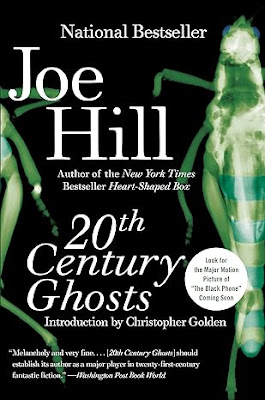
Seriously, check it out if you haven't, yet.

Now, not every story in this collection falls into the category of just ending with no falling action, or insufficient resolution. However, as you go through the book, you start to notice that every few stories you'll read one that seems to just stop mid-stride, particularly when it seems to be setting up a longer resolution for the reader. It is, to be a little crude, sort of like a literary version of a ruined orgasm. While a lot of folks I talked to stopped reading the first or second time this happened, if you read through the entire collection, you begin to realize this was a stylistic choice made by the author, and not a fluke, or a result of some deficiency of skill.

Now, I can disagree with that choice. A lot of folks did. However, it should be noted that Joe Hill is an author of no little skill, he has connections in the industry, and a fairly large fan base. So if he wants to take a risk like that in his work because that's his artistic vision, he can get away with that. If you're just starting out, though, you need to do things the traditional way at least a few times to be sure you understand the process completely before you start messing with the rules.

Sort of like how Picasso's early paintings were very traditionally representational, before they descended into the madness of his more signature look.

Stories, whether they're long or short, can't just suddenly jolt the audience to a stop. Once you hit the crescendo, you have the falling action (which I talked about back in Falling Action: The Cool Down of Story Writing), and your wrap up. Now, for short stories, and certain genres of fiction, you can get away with a sudden ending (I'm looking at you, horror). However, even when you have those sudden endings (the door of the tomb closes, trapping the protagonist in the pyramid, the man trapped on a desert island puts the barrel of his gun to his temple, etc.) they often imply the broad strokes of what comes after, or answer questions the audience might have.

This isn't to say that you have to answer every, single question that was asked in a story, and resolve every plot thread from the quirky best friend to the barista who was sleeping with her boss in chapter three. However, before you just decide that you're done telling the story, make sure you have a resolution that is going to stand, and that you've tied everything up with the neatest bow you can so that the story doesn't just flop over because the back end doesn't have the same support that you gave the front end.

Support The Literary Mercenary


For folks who just want to do their part to help keep me making more content, please subscribe/follow me in these locations:

- The Azukail Games YouTube Channel (where I contribute video content)
- My Rumble Channel (longer videos that won't show up on YouTube)

And if you happen to have some spare dosh lying around, and you want to be sure my supply doesn't run low, consider become a Patreon patron, or leaving a tip by Buying Me a Ko-Fi!

Like, Follow, and Come Back Again!


That's all for this week's Craft of Writing! For more of my work, check out my Vocal archive, or at My Amazon Author Page where you can find books like my sci-fi dystopian thriller Old Soldiers, my sword and sorcery novel Crier's Knife, or my most recent short story collection The Rejects!
 
And to stay on top of all my latest news and releases, collected once a week, make sure you subscribe to The Literary Mercenary's mailing list. 

If you'd like to help support my work, then consider Buying Me A Ko-Fi, or heading over to The Literary Mercenary's Patreon page! Lastly, to keep up with my latest, follow me on Facebook, Tumblr, Twitter, and now on Pinterest as well!

Thursday, July 28, 2022

Falling Action: The Cool Down of Story Writing

When most of us think of the parts of a story that really stuck with us, we tend to think of the climax. It's that moment where things come to a head and the hero has that final fight, plays that last hole card, or (in some cases) where the bad guy wins. While that might not actually be the final page of the story, that's the part that takes the spotlight in most of our memories.

Unless, that is, the falling action falls flat on its face.

Some action falls harder than others.

Before we get into it this week, don't forget to sign up for my weekly newsletter to get all my updates right in your inbox. Also, if you've got a bit of spare cash that you'd like to use to help keep the wheels turning, consider becoming a Patreon patron!

Lastly, to be sure you're following all of my followables, check out my LinkTree!

What is Falling Action (And Why Does It Matter)?


Falling action is the general term for what happens to the plot after your climax. If your novel were a workout routine, and your climax was your big, powerful lift that you needed to finish with an explosion of muscle and effort, then the falling action is the cool down that comes afterward. It may feel less impressive than the climax, but it's no less important to making sure your story is complete, and that you tie up all the loose ends in a satisfactory way (technically these are two different things, but more on that below).

Sudden, abrupt endings can be a serious problem.

Before we go on, yes, some stories aren't meant to have falling action in them. Maybe a novel ends on a cliffhanger, and the whole point is that you end on that note of high tension so that the reader immediately grabs the next book in the series to find out what happens. Maybe a short story ends with a hard slap in the face that's meant to shock the reader, with all the loose ends just left dangling in the breeze like cut cables in an elevator shaft.

But those are the exceptions that prove the rule.

Let's take a story like the Avengers. The battle of New York is obviously the big climax of the story, as it answers the question, "Will Loki defeat the Avengers?" Spoiler, he does not. When Iron Man blows up the alien vessel with a nuke, all the soldiers drop dead like puppets with their strings cut, the climax is well and truly over. The Falling Action, then, is our heroes realizing that the fight is over. It's when the citizens start coming out of the buildings, there's some cheers, and our heroes start clapping each other on the shoulders or roaring in triumph. Arguably it ends when Loki comes to from his smashing, sees the team holding him at hammer, arrow, and blaster point, and just gives up with a rueful smile.

One could argue that what comes after is actually the denouement. The battle is won, and we see what each member of the team is doing. Thor returns Loki to Asgard, Clint is heading off to spend time with his family, Steve is finally back and in his element, and so on, and so forth. We find out what happened to the cosmic cube, what's happening to our villain, and we are told how the major events played up so that we have a full, well-rounded conclusion.

Did we need all of that, strictly speaking? Could we have ended the movie with Loki groaning, and asking for that drink before he surrenders? Sure, we could have... but would it have been as satisfactory of an ending? Or would it have felt abrupt and final, rather than like a part of an ongoing series we were to come back for? That closure the final few scenes gives us is like a palate cleanser that helps really seal the meal, and brings the story to a satisfying stop, rather than just slamming on the brakes and telling us to tuck and roll on our way out the door!

Don't Skip Your Cool-Down


Now that we know what falling action is, and how it's coupled with the denouement, take a moment to ask yourself how you're using these ideas in your story. Are you letting your readers catch their breath, relax, and bask in a little post-climax cuddle with your cast? Or are you just kicking them out of bed as soon as the juicy part's done, and telling them not to let the back cover hit them on the way out?

A lot of the time we get so focused on getting to the climax that we don't take our time with the lead up, but it can be just as bad when we treat it as the end of the story when there could very well be stuff that should come after it. A deep breath, a cigarette, answering some of those critical questions we've been gnawing on the whole time; all of that matters, too.

Don't rush past it just because the tale's been told. Stay awhile, and give us the, "And they all lived happily ever after."

Looking For Some Free Reads?

If you're one of those folks who enjoys short fiction (or unique novels) consider checking out some of my other work! Starting with my ongoing fantasy series The Silver Raven Chronicles!

- Part One: Devil's Night: A ghost haunts the streets of Kintargo. It's gotten bad enough that many Dottari won't go into the old district of the city. Tonight one of them finds out why.

- Part Two: From The Ashes: After a night of burning, the new lord mayor addresses the public of a city that doesn't want him here. Chaos and violence erupt, and a resistance movement is galvanized.

- Part Three: The Raven's Nest: The so-called Silver Ravens need a base of operations if they're going to resist the occupation of Thrune... while this smuggler's cove might do, there are complications involved in using it.

- Part Four: Circles in Salt: The Ghost joins the Silver Ravens in a bold assault on a prison complex. Who, or what, he is remains shrouded in mystery, though.


If you're looking for some additional reading in the mean time don't forget to check out my full Vocal archive, as well as some of my other stories linked below!

- The Irregulars: My official contribution to the Pathfinder Tales, The Irregulars follows an Andoran unit as they throw a wrench into the gears of Molthune's war machine.

- Waking Dogs- A World Eaters Tale: For my fans of Warhammer 40K, this is a story I felt compelled to tell about one of the infamous World Eaters remembering who he once was. It was also dramatized by the channel A Vox in The Void, for those who enjoy audio renditions.

- Crier's Knife: My sword and sorcery novel, we follow Dirk Crier as he sets out to collect his wayward cousin from parts unknown. Dark tidings lie ahead, but those who stand in his way will learn why the mountain folk say only a dead man crosses a Crier.

- Marked Territory and Painted Cats: Join Leo as he gets roped into other people's problems on the mean streets of NYC. A Maine coon with a bad habit of getting curious, explore the world of street beasts in these nasty little noir mysteries!


Like, Follow, and Come Back Again!


That's all for this week's Craft of Writing! For more of my work, check out my Vocal archive, or at My Amazon Author Page where you can find books like my cat noir novel Marked Territory, its sequel Painted Cats, my sword and sorcery novel Crier's Knife, or my most recent short story collection The Rejects!
 
And to stay on top of all my latest news and releases, collected once a week, make sure you subscribe to The Literary Mercenary's mailing list. 

If you'd like to help support my work, then consider Buying Me A Ko-Fi, or heading over to The Literary Mercenary's Patreon page! Lastly, to keep up with my latest, follow me on Facebook, Tumblr, Twitter, and now on Pinterest as well!