Showing posts with label stephen king. Show all posts

Wednesday, February 25, 2026

Know What Your Ending Is Before You Start Writing

For folks who didn't know, Pixar has a list of writing rules that people are expected to follow when crafting storylines for the company. Most of them are good things to keep in mind, but today I wanted to refer to writing rule #7, which (according to No Film School) reads:

Come up with your ending before you figure out your middle. Seriously, endings are hard, get yours working up front.

This might not feel natural for a lot of writers, but trust me, botching the ending is a very real issue. Hell, if Stephen King can get lambasted for his endings falling on their faces often enough that it was a serious problem with his body of work, then the rest of us need to take time to make sure we don't suffer from the same problem.

Seriously... know where you're going before you start.

Before we get into the nitty gritty this week, don't forget to sign up for my weekly newsletter to get all my updates right in your inbox. Lastly, to be sure you're following all of my followables, check out my LinkTree!

Lastly, don't forget to check out my Vocal archive for additional fiction, articles, explorations of weird history, and more!

You Can't Plan A Road Trip If You Don't Know The Destination


If writing a book is a journey, then the ending of that book is your destination. And while general destinations can work (We're going to California!), the more specific your end point is, the easier it becomes to plot your trip (We're heading to the Holiday Inn in Pasadena).

Take two examples of this. You're writing a spy thriller, and you know that your secret agent's handler is actually a mole who has been manipulating things from the inside, and he's responsible for the game of cat and mouse going on throughout the book. A general ending is, "And then Agent Carter unmasks Gerald, and defeats him." Sure, that works, but it's still pretty vague as to what actually happens. What form does this unmasking take? What does defeated mean in this context? It's still a destination, but it's vague with the details, and that could become a problem for you as the writer.

A more specific ending would be something like, "Carter fakes his death, and then breaks into Gerald's safe house, knowing he'll be going there to meet his contact. He confronts him, recording the incident in question, and getting his confession. Gerald is shot dead by a sniper, and in the final report Carter gives, we find out that Gerald was selling out the agency to a far more dangerous terrorist organization that's set up as the villain in the sequel."

Sorry, Gerald, but you're no longer useful to us.

It's one thing to know you're going to a particular town, but it's another thing to know exactly where you're going to end your story because you can then work backwards from there to figure out the plot, important story beats, and so on. Writing a novel is hard enough, there's no reason to just wing it, throw as hard as you can, and hope you hit the target instead of launching your story so far out to sea there's no way to recover it.

Don't drive your plot endlessly around in circles just looking for a place to park. The story will suffer, and more than that, you're going to bore your audience. However, it's also important to remember that your ending isn't set in stone. If it turns out you think of a better ending along the way, or you need to make changes to your plan, you can still do that. However, it's a lot easier to change your destination when you actually know what it is, instead of just depending on instinct and intuition to tell you when it's time to start winding down your narrative.

Support The Literary Mercenary


If you want to see me produce more work, consider some of the following options!

The Azukail Games YouTube Channel (where I contribute video content)
- The A.L.I.C.E. Files (a channel full of short stories, many of which are mine)

And if you happen to have some spare dosh lying around, and you want to be sure my supply doesn't run low, consider become a Patreon patron, or leaving a tip by Buying Me a Ko-Fi!

Also, if you're curious about how to write for tabletop RPGs, don't forget to check out my show Tabletop Mercenary, which you can find on both the Azukail Games channel!


Like, Follow, and Come Back Again!


That's all for this week's Craft of Writing! For more of my work, check out my Vocal archive, or at My Amazon Author Page where you can find books like my sci-fi dystopian thriller Old Soldiers, the Hardboiled Cat series about a mystery solving Maine Coon in Marked Territory and Painted Cats, my sword and sorcery novel Crier's Knife, or my most recent short story collection The Rejects!
 
And to stay on top of all my latest news and releases, collected once a week, make sure you subscribe to The Literary Mercenary's mailing list

If you'd like to help support my work, then consider Buying Me A Ko-Fi, or heading over to The Literary Mercenary's Patreon page! Lastly, to keep up with my latest, follow me on FacebookTumblrTwitter, and now on Pinterest as well!

Friday, October 13, 2023

Stories Need Endings, Not Amputations

You know how, when you're listening to a song, it often seems to just fade out? Even if the story the lyrics are telling isn't complete, or it feels like there should be another verse or two to really wrap things up, it's allowed to just go quiet, and declare that's a good enough place to stop?

Fiction can't really do that. Well... it can, but your readers aren't going to be happy with you if you do.

And you don't want them taking the chopper to you, and your work.

Before we get into it this week, don't forget to sign up for my weekly newsletter to get all my updates right in your inbox. Also, if you've got a bit of spare cash that you'd like to use to help keep the wheels turning, consider becoming a Patreon patron! To be sure you're following all of my followables, check out my LinkTree!

Lastly, make sure you check out my Vocal archive for several hundred other articles about geek ephemera, weird history, writing, and more!

Where Exceptions Prove To Be The Rule


For every piece of writing advice out there that tells you not to do something, there's going to be someone who has done it, and been successful while doing it. However, I feel that it's important to point out that the exception proves the rule in a lot of these cases, and it's important that you chew down and analyze why a particular author got away with something that everyone is telling you not to do.

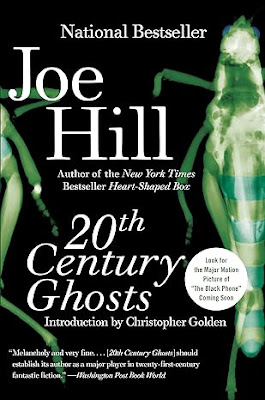
For today's example, the collection 20th Century Ghosts by Joe Hill.

Seriously, check it out if you haven't, yet.

Now, not every story in this collection falls into the category of just ending with no falling action, or insufficient resolution. However, as you go through the book, you start to notice that every few stories you'll read one that seems to just stop mid-stride, particularly when it seems to be setting up a longer resolution for the reader. It is, to be a little crude, sort of like a literary version of a ruined orgasm. While a lot of folks I talked to stopped reading the first or second time this happened, if you read through the entire collection, you begin to realize this was a stylistic choice made by the author, and not a fluke, or a result of some deficiency of skill.

Now, I can disagree with that choice. A lot of folks did. However, it should be noted that Joe Hill is an author of no little skill, he has connections in the industry, and a fairly large fan base. So if he wants to take a risk like that in his work because that's his artistic vision, he can get away with that. If you're just starting out, though, you need to do things the traditional way at least a few times to be sure you understand the process completely before you start messing with the rules.

Sort of like how Picasso's early paintings were very traditionally representational, before they descended into the madness of his more signature look.

Stories, whether they're long or short, can't just suddenly jolt the audience to a stop. Once you hit the crescendo, you have the falling action (which I talked about back in Falling Action: The Cool Down of Story Writing), and your wrap up. Now, for short stories, and certain genres of fiction, you can get away with a sudden ending (I'm looking at you, horror). However, even when you have those sudden endings (the door of the tomb closes, trapping the protagonist in the pyramid, the man trapped on a desert island puts the barrel of his gun to his temple, etc.) they often imply the broad strokes of what comes after, or answer questions the audience might have.

This isn't to say that you have to answer every, single question that was asked in a story, and resolve every plot thread from the quirky best friend to the barista who was sleeping with her boss in chapter three. However, before you just decide that you're done telling the story, make sure you have a resolution that is going to stand, and that you've tied everything up with the neatest bow you can so that the story doesn't just flop over because the back end doesn't have the same support that you gave the front end.

Support The Literary Mercenary


For folks who just want to do their part to help keep me making more content, please subscribe/follow me in these locations:

The Azukail Games YouTube Channel (where I contribute video content)
My Rumble Channel (longer videos that won't show up on YouTube)

And if you happen to have some spare dosh lying around, and you want to be sure my supply doesn't run low, consider become a Patreon patron, or leaving a tip by Buying Me a Ko-Fi!

Like, Follow, and Come Back Again!


That's all for this week's Craft of Writing! For more of my work, check out my Vocal archive, or at My Amazon Author Page where you can find books like my sci-fi dystopian thriller Old Soldiers, my sword and sorcery novel Crier's Knife, or my most recent short story collection The Rejects!
 
And to stay on top of all my latest news and releases, collected once a week, make sure you subscribe to The Literary Mercenary's mailing list

If you'd like to help support my work, then consider Buying Me A Ko-Fi, or heading over to The Literary Mercenary's Patreon page! Lastly, to keep up with my latest, follow me on FacebookTumblrTwitter, and now on Pinterest as well!
Sunday, August 20, 2023

The Ur Challenge (Mixing and Matching Genre and Author)

Back when the kindle was young, and reading off of portable computers was the new hot trend, Stephen King wrote a short story titled Ur. This short story was about a college professor who, out of spite at his ex, finally broke down and ordered a kindle of his own. However, while all kindles at the time were white, this one was pink. Not only that, but when he bought books to add to it, they were never actually charged to his card.

Without giving too many spoilers, he soon realizes there is something unique about this kindle... namely that it can access books written in other dimensions! These other Urs, as they're called, give us some strange insight into what people may be reading in the world next door. A notable example of which is the idea of a Hemmingway that wrote pot boiler crime novels... it's still definitely his work and style, but something so utterly unexpected that it makes you scratch your head wondering what that would be like.

For writers out there, I'm referring to this as the Ur Challenge, and I got the idea from Oxford Royale.

Let's get strange with this!

Before we get into it this week, don't forget to sign up for my weekly newsletter to get all my updates right in your inbox. Also, if you've got a bit of spare cash that you'd like to use to help keep the wheels turning, consider becoming a Patreon patron! To be sure you're following all of my followables, check out my LinkTree!

Lastly, make sure you check out my Vocal archive for several hundred other articles about geek ephemera, weird history, writing, and more!

What Styles and Genres Would You Mix and Match?


Folks who are fans of my work know that I am a fan of mixing and blending as much nonsense into the pot as I possibly can. Whether it's an old testament angel navigating the power games of ancient Babylonian gods in downtown L.A., or writing about a team of dishonorably discharged mercenaries taking on the horrors of Lovecraft's mythos, I like to mix and match my nonsense.

You can find those stories in The Rejects and SNAFU: An Anthology of Military Horror, for those who are curious.


While mixing and matching genres and conventions can be fun, the Ur Challenge takes things a step further. Because it's one thing to imitate the particular style and tradition of a known writer, but it's quite another to take that style, and then attempt to write a completely different genre than that author would ever have tackled.

It's kind of like Post-Modern Jukebox, but for books!

So if you need a bit of inspiration to really get your fingers tuned up for something, ask yourself how you would tackle this prompt. Would you try to write a bodice-ripping romance in the style of H.P. Lovecraft? A post-apocalyptic tale of survival if it were told by Arthur Conan Doyle? A gritty private detective story with all the purple prose of Robert Howard? They sky is the limit, but the very concept can really get your mind moving, so I thought I'd share it this week!

Support The Literary Mercenary


For folks who just want to do their part to help keep me making more content, please subscribe/follow me in these locations:

The Azukail Games YouTube Channel (where I contribute video content)
My Rumble Channel (longer videos that won't show up on YouTube)

And if you happen to have some spare dosh lying around, and you want to be sure my supply doesn't run low, consider become a Patreon patron, or leaving a tip by Buying Me a Ko-Fi!

Like, Follow, and Come Back Again!


That's all for this week's Craft of Writing! For more of my work, check out my Vocal archive, or at My Amazon Author Page where you can find books like my sci-fi dystopian thriller Old Soldiers, my sword and sorcery novel Crier's Knife, or my most recent short story collection The Rejects!
 
And to stay on top of all my latest news and releases, collected once a week, make sure you subscribe to The Literary Mercenary's mailing list

If you'd like to help support my work, then consider Buying Me A Ko-Fi, or heading over to The Literary Mercenary's Patreon page! Lastly, to keep up with my latest, follow me on FacebookTumblrTwitter, and now on Pinterest as well!

Wednesday, August 29, 2018

Who's Your 5th Business?

Beneath the skin of every story there is complicated machinery at work. Villainous machinations, misunderstandings, motivations, desires, dreams, and needs are the cogs and gears that turn the mechanism. All these parts and pieces are what fit together, fire your characters' synapses, and keep things moving forward.

Scene 1, Act One: The Gun Goes Off
While there are no universal rules for writing, there is language we can use to talk about these nuts and bolts. Our protagonist, for example, is our lead character. The antagonist is the opposition to our lead. We can talk about character development where the cast members change (or don't), we can talk about plot arcs, personal arcs, plot twists, prologues, and epilogues.

There is a term not all of us know, though. In fact, I just came across it the other day listening to Stephen King's Revival. However, the idea of the 5th Business is now locked in my brain as a term for certain pieces of machinery I hadn't codified before, so I thought I'd share it.

The 5th Business


As Language Hat tells us, this term comes from the novel 5th Business by Robertson Davies. The title is explained by a quote on the dedication page that reads:

Those roles which, being neither those of Hero nor Heroine, Confidante nor Villain, but which were nonetheless essential to bring about the Recognition or the denouement, were called the Fifth Business in drama and opera companies organized according to the old style; the player who acted these parts was often referred to as the Fifth Business.

What does all that mean?

Well, in the book this quote precedes, starts with a mis-aimed snowball. The action was precipitated by a character who had none of the traditional roles listed in the main cast, but whose actions meant they weren't part of the background scenery. In short, the character who threw that snowball became an agent of change. The snowball hit a pregnant woman, making her give birth early. It saddled the boy who dodged the throw with a sense of lifelong guilt. It affected other members of the cast in a profound way, acting as the nudge that pushed them onto certain tracks of development.

And now, my action complete, I'm off to someone else's story!
That is the role of the 5th Business; acting as an agent to bring about the Recognition, or the unraveling of the play. While this was an invention of the author (who attributed the quote to a Danish author in order to satisfy his publishers at the time), it is one that has a use when discussing the role of certain integral parts of your story's clockwork.

So whether your 5th Business is part of an inciting incident, or their actions are what set the stage for the upcoming events, ask yourself who they are. Not only that, but ask if they understand the events they're setting in motion, and whether they understand they are agents of your story. Because a lot of the time, the 5th Business really has no intention of meddling in someone else's affairs... but that doesn't stop their actions from crystallizing someone else's path.

Or even several someones.

That's all for this week's Craft of Writing. Hopefully some folks out there find this interesting, and if you'd like to see more work from me, go and check out my Vocal archive. To stay on top of all my releases, follow me on Facebook, Tumblr, and Twitter. Lastly, if you'd like to support me and my work, consider Buying Me A Ko-Fi as a one-time tip, or becoming a regular, monthly patron over on The Literary Mercenary's Patreon page. Either way, there's a lot of free stuff in it for you!

Wednesday, February 22, 2017

Literary Polyamory: It's Okay To Write More Than One Genre

Authors have a tendency to define ourselves by our work. We also have a tendency to pick a single fictional neighborhood, and settle into it. Part of that is because we might be working on a series, or we really enjoy one genre, but it's also a marketing concern. After all, readers search for new books based on genre labels, so it's important to establish yourself in your district, and to raise your flag as high as you possibly can if you want to get noticed. Once your name is synonymous with a given genre, then you have reached the top of the mountain.

Can you see me yet? Buy my book!
It works, too. If you make a name for yourself doing one thing really well, then people who are interested in that thing are going to seek you out. But sometimes you may want a change from your usual. Maybe you want to stop telling stories about wizard schools, and pen a series of private detective stories. Perhaps you'd like to set aside your dark fantasy tales and do some grim, gritty dystopian novels. Or maybe you're known for writing modern fantasy stories about monster hunters, but you really want to try your hand at some hard sci-fi.

Well, there's nothing that says you have to stay married to a single genre.

Literary Polyamory: When You Have Multiple, Loving Genres


Nowhere is it written that just because you've written romance, horror, sci-fi, or fantasy stories in the past that you are no longer allowed to write other kinds of stories. All you have to do is have a sit-down with your primary genre, and talk things out. They're usually pretty understanding, as long as you make it clear what you want.

No, really, it's fine. Horror and I have an open relationship these days.
There are a couple ways you can go about this. The first, which is the method I use, is to just write whatever the hell you feel like at any given moment. Seriously, if you take a look at my Amazon Author Page, you'll find horror, sci-fi, fantasy, RPGs, and steampunk all sitting shoulder-to-shoulder on my shelf. It's pretty freeing, but it does present a bit of a marketing dilemma. Because while there are some readers who are more than happy to check out my various publications on the strength of my name alone, aside from those five or six people, readers tend to be picky. Some will read my horror stories, but not the fantasy. Some love the steampunk, but aren't interested in my other sci-fi. And my readers who enjoy my roleplaying game work aren't clamoring to buy my fiction. That's the risk you take when you decide to put one name on all your work.

The other strategy is to create a pen name dedicated to your work in other genres.

All the examples I mentioned earlier are authors who were already seeing success in one genre, but they wanted to do something different. So they decided to put a different name on the cover as a way to help readers separate their work more easily. Stephen King wrote harsh, gritty fiction under the name Richard Bachman, Seanan McGuire writes sci-fi under the name Mira Grant, and J.K. Rowling has written mysteries under the name Robert Galbraith. Sometimes authors try to distance themselves from their pen names, and sometimes they don't, but the result is that a pen name is one more search term that's easier to type in. If you want the author's main genre, search under their name. If you want to see their side project, you've got another term to use.

Never the twain shall meet.

The advantage of this approach is that it's easier on readers' brains. People, in general, like to put things into neat little boxes. They like to read certain genres, and they like it when an author has a certain style, and certain expectations. So by separating your body of work into more easily-digested portions, readers don't have to parse through the whole buffet to find the dishes that appeal to them. With that said, it can be quite hard putting out books under one name, much less under two, three, or more.

Write What You Want


A friend of mine once attended a panel at Wizard World in Chicago that had John Carpenter on it. When it came time to ask questions of the guests, my friend asked, "how do you decide what to work on next?" The answer, without varnish or careful thought was, "what gets your dick hard?"

So many things...
This is one of the most freeing pieces of advice I've ever heard, and I would recommend anyone planning on being a creative professional follow it. Because you can have all the talent, skill, and resources in the world, but if your heart isn't in a project then it's going to show. In fact, that lack of heart might be a book's downfall. So if you need a break from your established genre, take one. Cleanse your palate, and start a project that puts some spring back into your step.

Your readers will thank you for it.

That's all for this week's Craft of Writing post. Hopefully there are some folks who found it interesting, or at least helpful to consider. If you'd like to support me and my blog, stop on by The Literary Mercenary's Patreon page to toss some bread in my jar. All it takes is $1 a month to make a big difference, and to get some sweet swag as a thank you present. And, lastly, if you want to keep up to date on my latest posts, follow me on Facebook, Tumblr, and Twitter.

Wednesday, November 9, 2016

Neil Gaiman Hit It On The Head When He Talks About "The Freelance Mentality"

Because I hope that success can be transmitted via osmosis, I've been listening to Neil Gaiman's View From The Cheap Seats. This book, which is a collection of his non-fiction (including speeches, forwards, newspaper and magazine articles), covers a wide range of topics. We get some personal pieces about famous people he's known and worked with (including his friend the late Terry Pratchett, and his wife Amanda Palmer), as well as literary criticism, and a speech he gave warning about the comics bust in the 1990s when people were buying them as investments.

The point that stuck with me most from the book, though, was his discussion of the freelance mentality. Something that, like a sword, is both helpful, and destructive.

Fitness? Of course I know about fitness! How many words you want?
The freelance mentality is something you develop when you work as a mercenary. It means you're always looking for new work, and there's no such thing as a plate that's too full. Even if you're absolutely swamped with work, and coming up on deadline, you cannot afford to say no to a project. Because you have to keep something in the pipe at all times, otherwise your feast is going to turn into a famine quite quickly. The significantly more famous Neil was a freelancer for over a decade before he had projects like Sandman, Coraline, and American Gods under his belt, but even once he was stacking the sort of royalties you and I can only guess at, he still found it hard to say no.

It's pretty simple to understand why, when you think about it. If you're a soldier, and you spend all your time on the front lines, you develop certain reflexes. A view of the world that keeps you alive. When you return to the civilian world, you're academically aware that things are different. But it takes time for those reflexes to lose their edge, and fade away. Sometimes they never fade, and they're just something you deal with. A coping mechanism that was once necessary, but which is now a hindrance instead of a help.

Gaiman hasn't been the only victim of this condition. The infamous Stephen King talked about how he was convinced, for years, that his success was all going to stop. That there had been some mistake, and all those checks were going to have to be given back. That fear, that mentality, meant he kept writing and submitting. If a magazine needed short stories, he got them done. If a publisher had an opening, he filled it. While I haven't met the man (much to my personal and professional disappointment), I have a feeling that the freelance mentality is partially to blame for him setting the pace he has kept to this day.

Because when you hustle day-in, and day-out, it's something you can't stop. Even when you don't need to do it anymore.

It Works, If You Need It


I don't make the allusion to a battlefield lightly. If you step onto the field as a freelancer, you need to keep your steel sharp. You don't get paid by the hour, you don't get coffee breaks, and you don't get to call in sick. You don't get to miss deadlines, and make it up later. You also need to take on tasks you're not sure you're qualified for, and hope for the best.

Shakespeare gotta get paid, son.
Mr. Gaiman admitted, in one of his pieces, that when he was new to the field he would lie about who he'd worked for, or what subjects he knew about, because he needed the check attached to the job. Harrison Ford found himself in a similar position when he talked up his carpentry skills, but really had no idea how to build sound studios. If you find anyone famous or successful in a creative field, and dig back far enough, you'll find they've stretched the truth about their expertise or experience in order to pay rent.

In a world where you can Google anything, this is more common than ever before.

The most important part of the freelance mindset, though, is knowing where the off button is. Because, if you're lucky, you might reach a point where you can look at a project pitch and say, "you know, I really don't have the time or the skill set for that." When you have a body of work that is paying your debts, and allowing you to feel comfortable, you no longer need to reach for your sword at the slightest hint that someone needs you to use it.

The hard part, of course, is getting to that point. I'll let you know how it goes, if I ever get there.

That's all for this week's Business of Writing post. If you haven't read View From The Cheap Seats yet, I highly recommend it. Especially if you can find the audio read by the author. If you'd like to help support me so I can keep producing content just like this, well, drop by The Literary Mercenary's Patreon page to leave some change in my jar. Lastly, if you haven't followed me on Facebook, Tumblr, or Twitter yet, well, what's stopping you?